

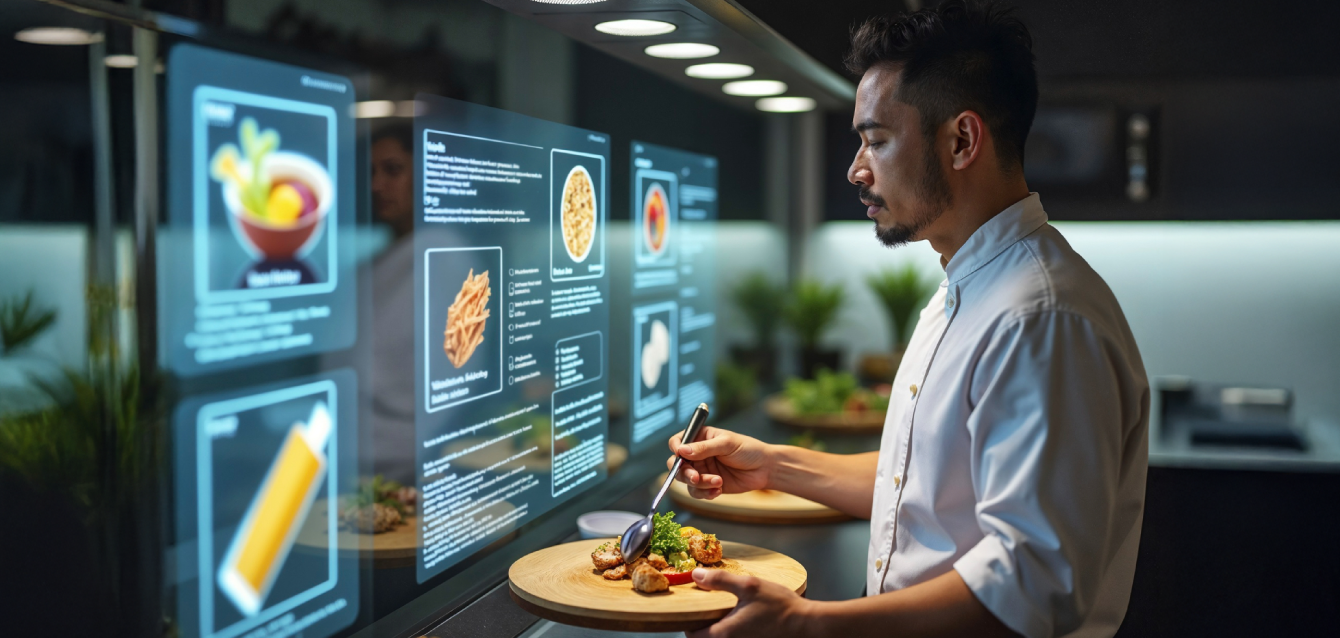
According to the National Restaurant Association, over 75% of restaurant operators say technology gives them a competitive edge, especially when it comes to improving customer experience.
Because today, dining out isn’t just about food—it’s about how effortlessly everything works.
A table isn’t just a table anymore. It’s an experience customers expect to be fast, seamless, and surprisingly personal.
Why is Customer Experience the Real Differentiator?
Great food might get customers through the door, but it’s the experience that brings them back.
Today’s diners expect more than just a good meal; they want speed without feeling rushed, personalization without asking, and consistency every single time they visit. One bad experience, a long wait, or an ignored preference is often enough to lose them to a competitor just a click away.
For restaurants, this creates a complex challenge. Delivering high-quality, consistent experiences across peak hours, different staff members, and multiple locations isn’t easy. Traditional systems rely heavily on human effort, which makes scaling that experience difficult.
This is where the real shift happens. The restaurants that win aren’t just serving food, they’re designing experiences. And AI becomes the layer that helps make those experiences faster, smarter, and far more consistent without losing the human touch.
Key Areas Where AI in Restaurants Improves Customer Experience
AI in restaurants isn’t about replacing human interaction; it’s about enhancing it. When implemented correctly, AI works quietly in the background, removing friction, anticipating needs, and enabling staff to focus on what truly matters: delivering great hospitality. Here are the key areas where AI is making a measurable impact on customer experience.
1. Smart Reservations & Waitlist Management
Long wait times and poor queue management are among the fastest ways to frustrate customers. AI in restaurants helps businesses move from reactive to predictive operations.
By analyzing historical data, peak hours, booking patterns, and walk-in trends, AI can:
- Predict wait times more accurately
- Optimize table allocation in real time
- Adjust reservations dynamically based on no-shows or delays
For customers, this means fewer uncertainties and better planning. For restaurants, it translates into higher table utilization and smoother service flow.
Real-World Example: How OpenTable Enhances Experience
Platforms like OpenTable demonstrate how reservation systems can go beyond simple bookings. By categorizing restaurants based on food, service, ambience, and value, they provide customers with deeper insights before they even step in.
For restaurants, this data becomes actionable. It allows them to:
- Adjust staffing strategies based on peak demand
- Improve service quality where ratings drop
- Optimize inventory based on popular dishes
- Use AI-driven chatbots or voice agents for seamless booking and support
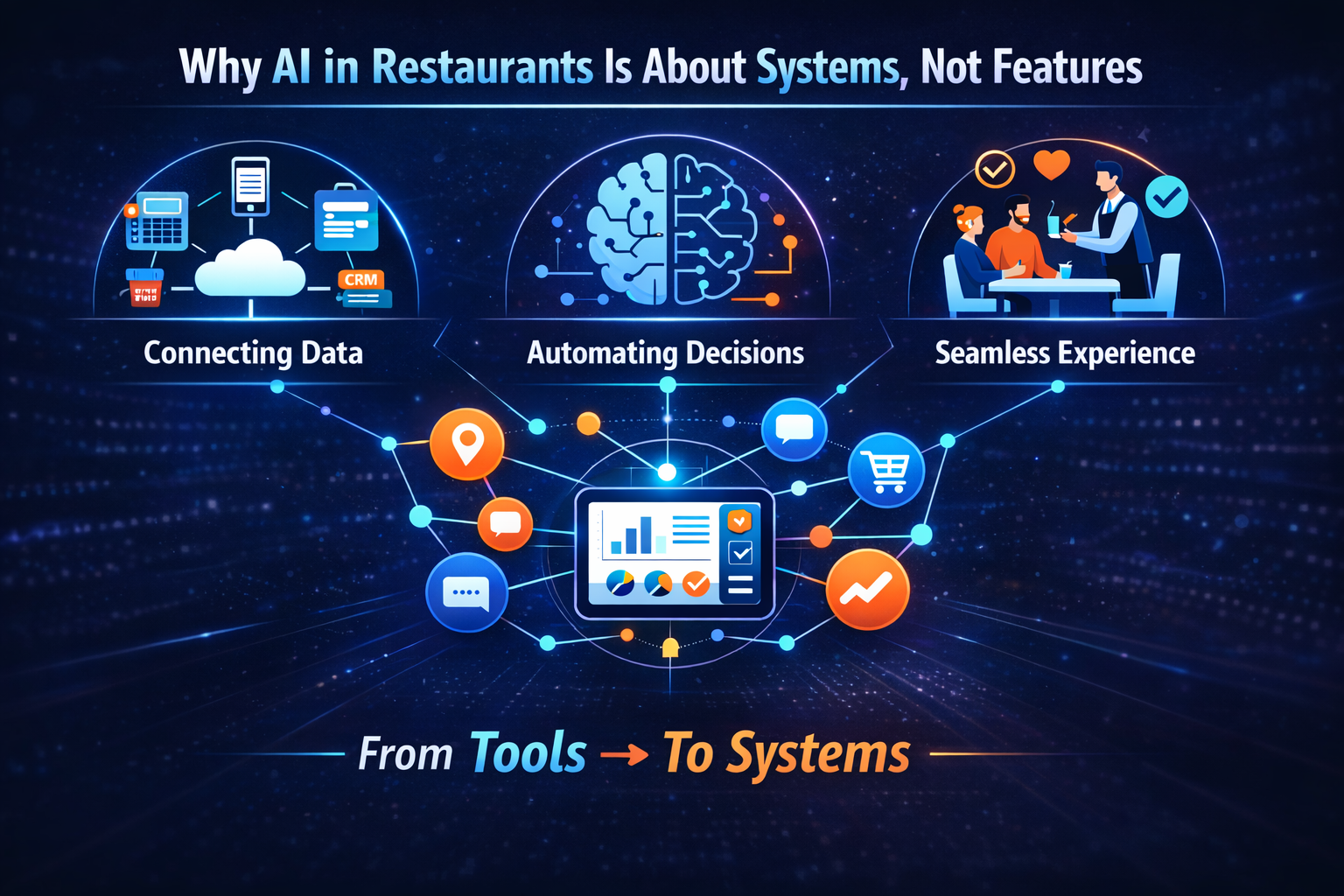
This is where AI moves from being a tool to becoming a system; connecting customer feedback, operations, and decision-making into one continuous loop.
2. Personalized Recommendations & Ordering
One-size-fits-all menus no longer match modern expectations. Customers want relevance, and AI makes that possible at scale.
AI systems can analyze:
- Past orders
- Dietary preferences
- Time of visit (lunch vs dinner patterns)
- Popular combinations
Based on this, restaurants can offer:
- Tailored menu recommendations
- Smart upselling (e.g., suggesting a dessert that pairs well with a selected dish)
- Customized promotions
This doesn’t just improve the experience, it increases average order value while making customers feel understood rather than sold to.
3. AI-Powered Chatbots & Voice Assistants
Customers expect instant responses, whether they’re booking a table or asking about menu options. AI-powered chatbots and voice assistants ensure that restaurants are always available.
These systems can handle:
- Reservations and cancellations
- Frequently asked questions (timings, location, menu details)
- Order tracking and updates
Available 24/7, they reduce dependency on staff for repetitive queries while ensuring customers don’t face delays. The result is faster communication, fewer missed opportunities, and a smoother pre-dining experience.
4. Faster, Frictionless Ordering & Payments
Speed and convenience are critical, especially in high-traffic environments. AI enhances ordering and payment systems to reduce friction at every step.
Use cases include:
- Self-service kiosks with intelligent suggestions
- Mobile ordering apps that remember preferences
- Voice-enabled ordering systems
- Automated bill splitting and payment recommendations
By minimizing manual steps, AI reduces waiting time and errors. Customers enjoy a seamless experience, while staff can focus on service instead of processing transactions.
5. Real-Time Feedback & Sentiment Analysis
Traditionally, feedback comes too late after the customer has already left. AI changes this by enabling real-time sentiment tracking.
AI tools can analyze:
- Customer reviews across platforms
- In-app feedback
- Social media mentions
More importantly, they can identify patterns:
- Recurring complaints about service delays
- Specific dishes receiving negative feedback
- Location-based performance issues
This allows restaurants to act immediately rather than react later. Fixing issues in real time not only improves customer satisfaction but also protects brand reputation.
6. Predictive Demand & Inventory Optimization
Nothing disrupts customer experience like unavailable items or slow service during peak hours. AI helps restaurants stay ahead of demand.
By analyzing past data, seasonal trends, and external factors, AI can:
- Forecast demand for specific dishes
- Optimize inventory levels
- Reduce stock-outs and over-preparation
This ensures that customers get what they expect, when they expect it. Consistency in availability directly contributes to trust and satisfaction.
7 Staff Enablement & Smarter Service
AI doesn’t replace staff; it empowers them. With access to AI-driven insights, staff can:
- View customer preferences and order history
- Make better recommendations
- Anticipate needs before being asked
For example, a returning customer might be greeted with their usual order suggestion or dietary preference already noted. This creates a more personal, attentive experience without requiring staff to remember every detail manually.
The Bigger Picture: How AI Systems Connect the Full Dining Experience
Individually, each of these applications improves a specific touchpoint. But the real value of AI comes when these systems are connected.
When reservations, ordering, feedback, and inventory systems work together, restaurants move from isolated improvements to a fully optimized experience. The result is not just efficiency, it’s a seamless journey for the customer from start to finish.
In a space where small details define loyalty, AI enables restaurants to deliver those details consistently, intelligently, and at scale.
How to Implement AI in Restaurants (Step-by-Step Guide)
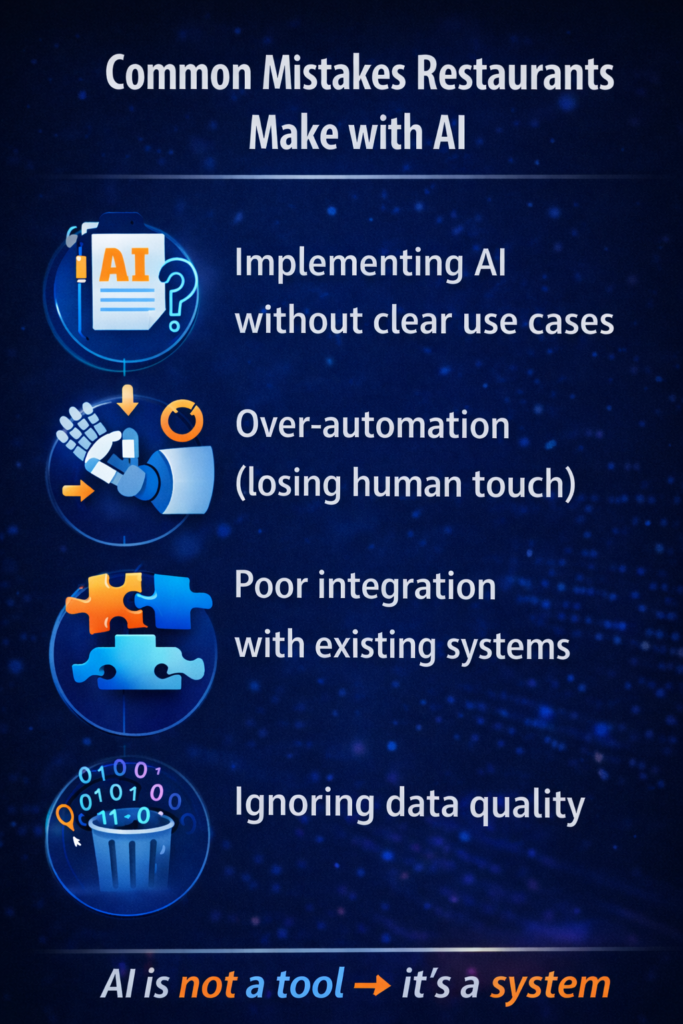
Adopting AI in a restaurant isn’t about jumping on trends or implementing the most advanced tools right away. It’s about solving real operational and customer experience challenges in a structured, scalable way. The most successful restaurants approach AI not as a one-time upgrade, but as a gradual transformation.
1. Start with Identifying Experience Gaps: Before introducing any technology, it’s important to understand where your current experience is falling short. Ask questions like:
- Where do customers face the most friction? (long wait times, slow service, order errors)
- At what points do you lose potential customers? (missed reservations, delayed responses)
- What feedback are customers consistently giving?
This step ensures that AI is applied where it creates real value, not just where it seems innovative.
2. Prioritize High-Impact, Low-Complexity Use Cases: AI doesn’t need to be implemented across the entire operation at once. Start small with areas that can deliver immediate impact. Common starting points include:
- Reservation and waitlist automation
- Chatbots for customer queries
- Personalized ordering recommendations
These use cases are relatively easier to implement and can quickly improve both efficiency and customer satisfaction. Early wins also help build internal confidence in adopting AI.
3. Integrate AI with Existing Systems: One of the biggest mistakes restaurants make is treating AI as a standalone tool. For AI to be truly effective, it needs to connect with your existing systems. This includes:
- POS (Point of Sale) systems
- CRM tools
- Inventory management platforms
When these systems are integrated, AI can access and analyze data across the entire operation. This enables smarter decisions, such as predicting demand, personalizing experiences, and optimizing workflows. Without integration, AI remains limited and fragmented.
4. Focus on Data Quality and Consistency: AI is only as effective as the data it works with. Inconsistent or incomplete data can lead to poor recommendations and unreliable outcomes. Ensure that:
- Customer data is clean and updated
- Order histories are properly tracked
- Inventory data is accurate
Establishing strong data practices early on lays the foundation for more advanced AI capabilities in the future.
5. Train and Involve Your Team: AI adoption isn’t just a technical shift; it’s an operational one. Your staff plays a critical role in how effectively AI is used. Instead of positioning AI as a replacement, present it as a support system that:
- Reduces repetitive tasks
- Provides better insights
- Helps deliver faster, more personalized service
Training your team to understand and use AI tools ensures smoother adoption and better outcomes for both staff and customers.
6. Measure What Matters: To understand the real impact of AI, you need to track the right metrics. Key indicators include:
- Average wait time
- Order accuracy
- Customer satisfaction scores
- Repeat visits
- Average order value
Monitoring these metrics helps you evaluate what’s working, what needs improvement, and where to expand AI further.
7. Scale Gradually with a System-First Approach: Once initial use cases are successful, the next step is to expand. But instead of adding disconnected tools, focus on building a connected system. AI works best when it:
- Shares data across functions
- Automates decisions, not just tasks
- Enhances the entire customer journey, not isolated touchpoints
This shift from tools to systems is what allows restaurants to truly transform their operations and customer experience.
Getting started with AI doesn’t require a complete overhaul. It starts with clarity, small steps, and the right priorities. Restaurants that approach AI strategically can create experiences that are not only efficient but also deeply personalized, setting a new standard for what customers expect. AI in restaurants is not just improving efficiency—it’s redefining how customer experience is delivered at scale.
The future of dining isn’t just about better food; it’s about better experiences. And in a world where expectations are constantly rising, consistency, speed, and personalization are no longer optional.
AI enables restaurants to deliver all three at scale.
But the real advantage doesn’t come from adopting isolated tools. It comes from building connected systems that understand customers, support staff, and optimize every touchpoint of the journey.
The restaurants that win won’t be the ones that use the most AI, but the ones that use it the most intelligently, enhancing hospitality, not replacing it.
If you’re looking to create a smarter, more seamless dining experience, now is the time to start.
FAQs-
- How does AI in restaurants improve customer experience?
AI enhances customer experience by making interactions faster, more personalized, and consistent. It enables smart reservations, tailored menu recommendations, faster ordering, and real-time support, creating a seamless journey from booking to dining.
- What are the most common AI use cases in restaurants today?
Common use cases include smart reservations and waitlist management, personalized recommendations, AI chatbots for customer support, demand forecasting, and inventory optimization, each improving efficiency and customer satisfaction.
- Will AI replace human staff in restaurants?
No. AI is designed to support staff, not replace them. It handles repetitive tasks like bookings and order processing, allowing staff to focus on delivering better service and enhancing the overall dining experience.
- How can a restaurant get started with AI?
Restaurants should begin by identifying customer experience gaps, then implement AI in high-impact areas like reservations or ordering. Integration with existing systems and gradual scaling are key to successful adoption.
- Why is AI in restaurants considered a system and not just a tool?
Because AI delivers real value when it connects multiple functions, reservations, ordering, feedback, and operations into a unified system, enabling smarter decisions and a seamless customer experience.